Maritime document guide
A considered first step.
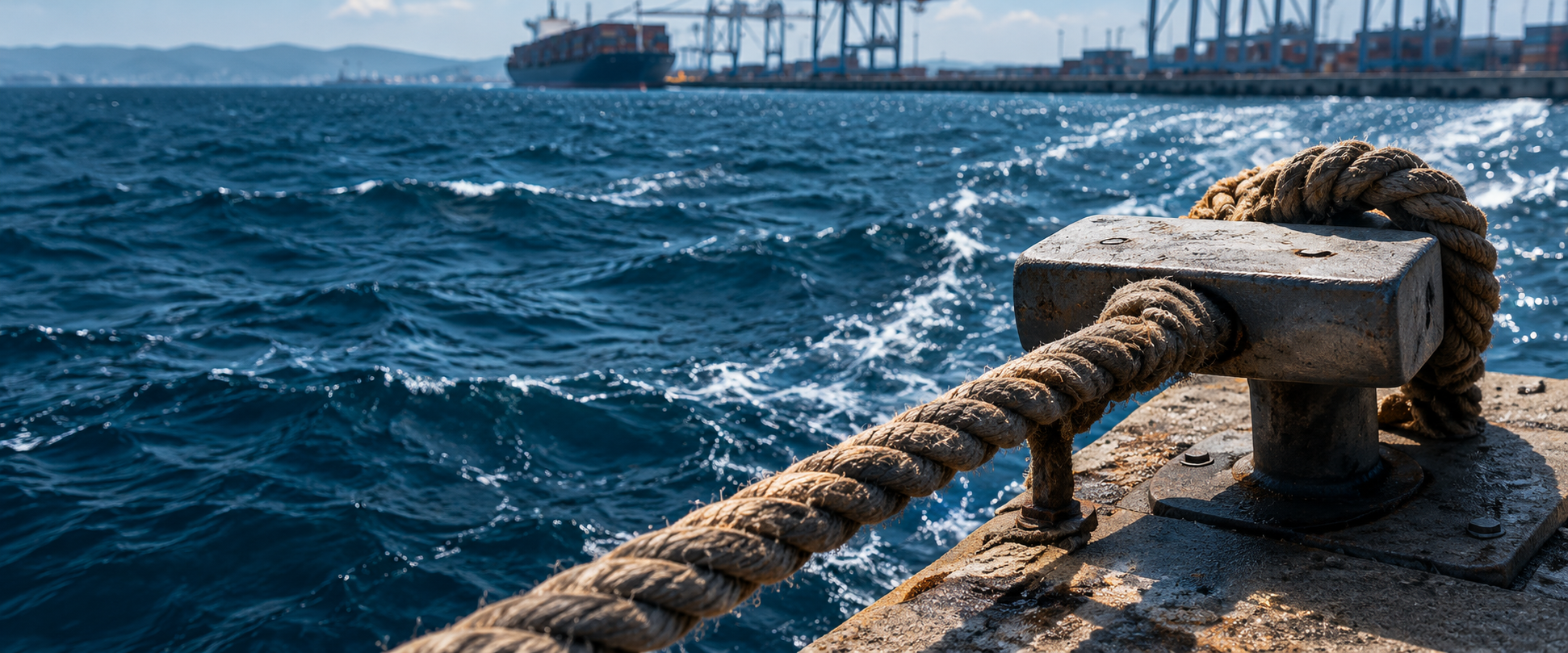
AI-generated illustrative mooring-rope scene; no business location or operation is depicted.
A clearer conversation
Every maritime question has its own context. Identify the commercial relationship, the documents involved and the question still unanswered before drawing a conclusion.
CONTEXT FIRST.
A MORE CONSIDERED QUESTION.
Name the relationship
A commercial order, transport arrangement and vessel-related agreement are different document categories. Describe which relationship is involved and each party’s role. An issuer’s name is useful context; it is not by itself a conclusion about authority or responsibility.
Keep originals and working notes distinct. A concise private document map can record the document name, its apparent purpose, date, source and the question it raises. Mark an uncertain description as uncertain rather than silently completing it.
Separate records from observations
For a shipment question, a transport record may describe the movement of goods while a delivery note records a later observation. Correspondence may express a position without establishing an agreed fact. Read each category in its own context.
A useful outline distinguishes what you personally observed, what a document states and what someone else reports. That framework helps an independently qualified professional identify which sources need examination.
Keep the next question precise
Ask what information is needed to understand the relationship, which documents matter and who is qualified to examine the issue. Confirm applicable authority and engagement terms through that professional’s verified channel.
This site has no document submission route. General questions can go to info@bhmaritime.com, but keep confidential shipment identifiers, counterparties and attachments out of the site and out of that email. The published material is general orientation.
Match the document to the question
A useful maritime document map records what each source actually says. Keep related records together, but avoid treating a document label as an answer about rights, responsibility or the outcome of a shipment.
Cargo and delivery records
Record the document title, issuer, date and version. Note separately any quantity or condition observation and who made it. Keep the transport record, delivery observation and correspondence distinct.
Names and roles in shipping documents: record what is stated →
Vessel arrangements and correspondence
Keep the agreement text alongside attachments and later exchanges. Mark a proposed change, a response and a confirmed record as different entries. Record unfamiliar terms rather than filling gaps from a general article.
Start a careful reading glossary →
Insurance-related records
Record the policy or certificate title, named parties, period stated and associated correspondence. Turn uncertainty into a question for the appropriate professional; a document list does not establish coverage.
Turn the document into questions →
Questions about document maps
What belongs in a document map?
Use a private list of titles, sources, dates, versions and unresolved questions. Retain originals and keep working notes identifiable.
What if two records disagree?
Keep both versions with their sources. Describe the difference precisely and ask the relevant professional which evidence they need; do not silently choose a preferred account.
Blue Harbor Maritime
Blue Harbor Maritime is a proposed maritime information project with a Dubai focus. Entity, team and admissions remain unverified. General enquiries: info@bhmaritime.com. No legal advice, representation or confidential intake is offered, by email or on this site.